
Creativity, Inc.
The 5AM Club
Good to Great
The Lean Startup
Building a Second Brain
Leaders Eat Last
Blue Ocean Strategy
The Innovator's Dilemma
Thinking, Fast and Slow
Never Split the Difference
The First 90 Days
Lean In
The Power of Habit
Four Thousand Weeks
Burn The Boats
Creativity, Inc. The 5AM Club Good to Great The Lean Startup Building a Second Brain Leaders Eat Last Blue Ocean Strategy The Innovator's Dilemma Thinking, Fast and Slow Never Split the Difference The First 90 Days Lean In The Power of Habit Four Thousand Weeks Burn The Boats
Keep your mind fresh with summaries of the best business books
Learn what you need to know in 10 minutes or less
Whether you are looking for your next reading journey, are too busy to get through a whole book, or just plain hate to read, Business Floss has you covered.
“Business Floss has saved me countless hours and $$$. I used to take a chance on books, hoping they would have the content I really wanted. Now I just read Business Floss and instantly know if a book will be a good fit for what I’m looking for. Business Floss is such a life hack.”
How Business Floss helps readers achieve more 👇
-
At Business Floss, we save you time by distilling the key takeaways from top business books into concise, easily digestible summaries. Our expertly crafted summaries extract essential insights, allowing you to stay informed and ahead in your industry without the need to read entire books.
-
Choosing the right book can be tough with so many options out there. At Business Floss, our summaries make it easy to pick your next read. We break down the key ideas and insights from each book, so you know exactly what value it offers before you buy it. Dive into new perspectives and find the perfect book for your next intellectual adventure with confidence.
-
At Business Floss, we know that remembering everything you read can be tough. Our summaries help reinforce the key concepts of each book, making it easier for you to remember and apply what you've learned. By breaking down the main ideas into bite-sized pieces, we ensure that the important lessons stick with you, helping you get the most out of every book.
A quick word from our founder

Thank you for visiting our site and supporting us!
Our team is committed to providing high-quality content that meets the needs of today’s business leaders. Stay tuned every week for new books to help you stay informed and inspire your business journey!
We appreciate your trust.
- Jeff K.
Latest Books
Losing the Signal is Jacquie McNish and Sean Silcoff's inside account of Research In Motion, the Waterloo company that turned a pocket email device into the tool of choice for presidents and CEOs, then watched its grip on the U.S. smartphone market slip from half to almost nothing. Drawing on interviews with executives, directors, and rivals, the two Globe and Mail journalists trace the partnership between engineer Mike Lazaridis and dealmaker Jim Balsillie, the carrier relationships that made BlackBerry thrive, and the distractions, rushed products, and leadership rifts that left it unprepared when Apple and Google rewrote the rules.
The 22 Immutable Laws of Marketing is Al Ries and Jack Trout's compressed statement of the positioning philosophy they spent careers developing. Its foundational claim is that marketing is a battle of perceptions rather than products, and that the mind's limited capacity for categories determines almost everything. The laws run from leadership and category creation through owning a single word, the perils of line extension, and the discipline of sacrifice. Written in 1993 and unapologetically absolute, it remains one of the sharpest things written on positioning.
In The Coming Wave, DeepMind co-founder Mustafa Suleyman warns that converging technologies including AI, synthetic biology, and quantum computing will reshape society on a scale humanity has not previously contained. The book explores the "containment problem" of preventing catastrophe while still capturing the benefits. A sobering and serious treatment of where the technology curve actually leads.
Storytelling with Data is Cole Nussbaumer Knaflic's practical guide to communicating with charts, drawn from her time at Google and in consulting. Its argument is that showing data and making a point are different tasks, and most business visuals default to the first. She organizes the work into six lessons covering context, chart selection, decluttering, directing attention, design thinking, and narrative, grounded in how visual perception actually operates. The book is software-agnostic and heavily worked through before-and-after examples rather than theory.
In The Everything War, Wall Street Journal reporter Dana Mattioli investigates Amazon's transformation from an online bookstore into an aggressive corporate titan. Drawing on hundreds of insider interviews, she exposes how the company leverages its massive data advantage, secret algorithms like Project Nessie, and espionage tactics through the Alexa Fund to crush competitors and copy third-party sellers. It is a sobering look at how monopolistic power reshapes global retail.
In Building a StoryBrand, Donald Miller shows that customers respond to clear stories, not clever marketing. His seven-part framework casts the customer as the hero and your brand as the guide who offers a plan and a call to action. By clarifying your message around what the customer wants and the problem you solve, you cut through the noise. The rule is simple: if you confuse, you lose.
First, Break All the Rules distills decades of Gallup research, drawing on interviews with over a million employees and eighty thousand managers, into an account of what the best managers actually do. Its central instrument is the Q12, twelve questions whose answers vary more between teams than between companies, which locates engagement with the immediate manager. Its central argument is four keys: select for talent rather than experience, define outcomes rather than steps, build on strengths rather than fixing weaknesses, and find the right fit rather than the next promotion.
Inspired is Marty Cagan's account of how strong product organizations actually operate, drawn from decades at eBay, HP, and Netscape and years advising companies through the Silicon Valley Product Group. Its central distinction is between feature teams that receive specifications and empowered teams that receive problems. The book covers the four risks discovery exists to eliminate, why discovery and delivery run in parallel rather than in sequence, the case against feature roadmaps, and what the product manager, designer, and engineering lead each actually contribute.

$100M Offers is Alex Hormozi's manual for constructing what he calls a Grand Slam Offer: a bundled proposition valuable enough that price comparison with competitors becomes impossible. Built from his experience scaling gyms and later a portfolio of companies, it argues most businesses fail not because their product is poor but because their offer is weak and commoditized. The book supplies a value equation with four levers, a five-step process for building an offer around customer obstacles, and five enhancers covering scarcity, urgency, bonuses, guarantees, and naming.

The Box is Marc Levinson's history of the shipping container and the economic transformation it produced. Its central argument is that the container was not an invention so much as a system: standardized dimensions, purpose-built ships, redesigned ports, compatible trucks and rail, and labor agreements, all of which had to arrive together before any of it worked. Levinson traces Malcom McLean's role, the standardization fights, the union negotiations, the Vietnam logistics contract that proved the concept, and the resulting collapse of historic port cities alongside the rise of global supply chains.
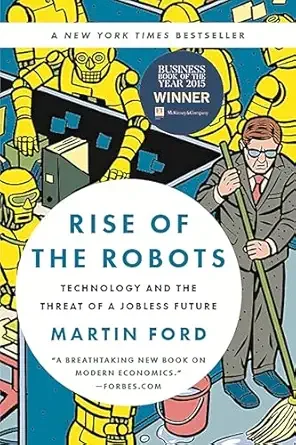
Rise of the Robots is Martin Ford's argument that this wave of automation differs from previous ones in ways that matter economically. A software entrepreneur, Ford contends that information technology functions as a general-purpose capability rather than a task-specific tool, that it increasingly targets educated white-collar work rather than only routine manual labor, and that seven observable economic trends already show the strain. He argues more education won't solve it, that mass automation eventually undermines the consumer demand it depends on, and that a guaranteed basic income deserves serious consideration.
In Good Strategy Bad Strategy, UCLA professor Richard Rumelt takes one of business's most abused words and gives it a spine. Most of what organizations call strategy, he argues, is ambition in disguise: goals, slogans, and template mission statements that never name the actual obstacle. Real strategy has a structure he calls the kernel, built from an honest diagnosis, a guiding policy, and coherent actions that reinforce one another. Drawing on Sam Walton, Nvidia, Apple's 1997 turnaround, and Desert Storm, Rumelt shows why focus beats ambition and why the hardest part of strategy is deciding what not to do.
In Chip War, economic historian Chris Miller traces how a sliver of silicon became the resource that determines who holds power. From Bell Labs and Cold War missile guidance to Morris Chang's foundry model and ASML's lithography monopoly, he shows how a globe-spanning supply chain quietly concentrated into a few irreplaceable chokepoints, and why Taiwan now sits at the center of the rivalry between Washington and Beijing.
In The Mom Test, Rob Fitzpatrick offers a deceptively simple guide to customer conversations that actually reveal the truth. Because friends and family will tell you what you want to hear, he provides rules for asking questions so good that even your mom can't lie: talk about their life, not your idea; ask about specific past behavior, not hypotheticals; and listen more than you pitch. It is an essential, practical book for any founder validating an idea.
In Never Lead Alone, executive coach Keith Ferrazzi argues that the era of the individual hero leader is dead. Drawing from decades of research, he outlines a transformational shift from traditional top-down management to "teamship." By embracing co-elevation, peer-to-peer accountability, and structured candor, organizations can dismantle the silos and conflict avoidance that destroy value. Master these shifts to build a deeply resilient, high-performing, and unified team.
In Supremacy, technology journalist Parmy Olson chronicles the high-stakes rivalry between OpenAI and DeepMind. She reveals how the noble quest to build artificial general intelligence devolved into a cutthroat proxy war between tech monopolies. By tracing the paths of Sam Altman and Demis Hassabis, Olson exposes how massive computing costs forced idealistic founders to compromise their safety principles, prioritizing rapid commercialization over the public good.
In The Everything Store, Brad Stone provides the definitive, unvarnished history of Amazon and its relentless founder, Jeff Bezos. Stone reveals how Amazon grew from a scrappy online bookstore into a global juggernaut by relying on a deeply contrarian playbook. By prioritizing extreme customer obsession, decades-long strategic thinking, and a famously ruthless corporate culture, Bezos proved that prioritizing long-term market dominance over short-term profits is the ultimate competitive advantage.
In The Canary Code, organizational psychologist and autistic community member Ludmila N. Praslova provides a comprehensive framework for neuroinclusion at work. She argues that neurodivergent employees are like canaries in a coal mine, sensing toxic environments and broken workflows first. By shifting from a deficit model to a dignity-based approach built on six core principles, organizations can create flexible, transparent systems where all talent thrives.
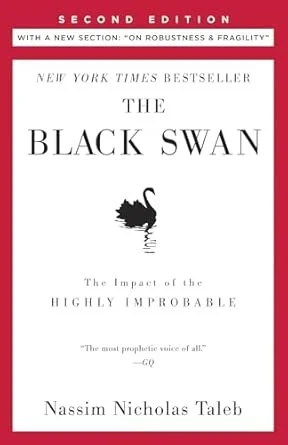
In The Black Swan, former options trader and philosopher Nassim Nicholas Taleb exposes the severe limitations of human prediction. He argues that history is driven not by predictable trends, but by highly improbable, high-impact events he calls Black Swans. By abandoning flawed bell-curve risk models and adopting a robust "barbell" strategy, professionals can stop acting like the Thanksgiving turkey and learn to survive in an inherently unpredictable world.
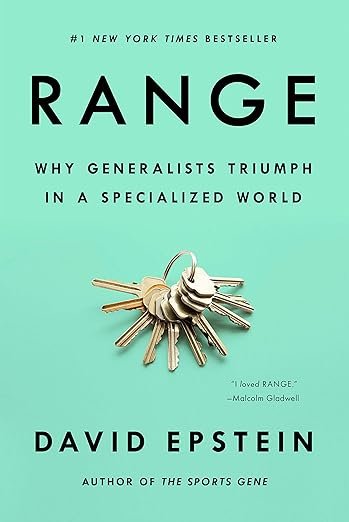
In Range, journalist David Epstein challenges the pervasive cult of the head start. While early specialization is highly effective in predictable fields with rigid rules, the modern economy is fundamentally unpredictable. Epstein argues that generalists—professionals who sample widely, delay committing to a single path, and draw analogies across diverse disciplines—are uniquely equipped to thrive. By embracing a broad, winding path, you build the creative agility required to solve complex problems.
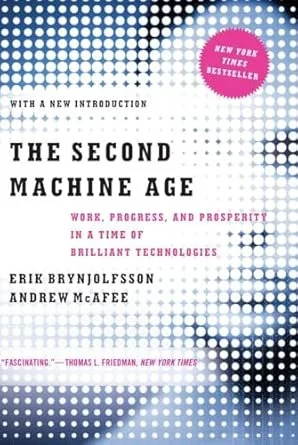
In The Second Machine Age, MIT researchers Erik Brynjolfsson and Andrew McAfee explain how digital technologies are doing for human brainpower what the steam engine did for muscle power. While this era promises unprecedented abundance, it also creates severe economic inequality by hollowing out routine jobs. To thrive, professionals must stop competing against computers and learn to race alongside them by mastering ideation, complex communication, and large-frame pattern recognition.
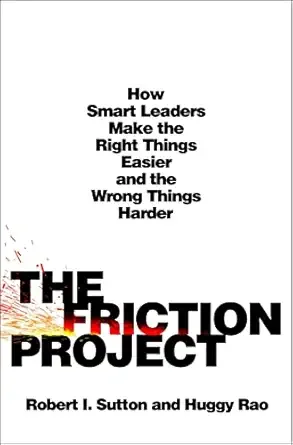
In The Friction Project, Stanford professors Robert I. Sutton and Huggy Rao provide a practical guide to identifying and managing organizational drag. They argue that skilled leaders act as "friction fixers," aggressively eliminating the bad friction that wastes time, while intentionally introducing good friction to prevent reckless decisions. Master these principles to cure addition sickness, protect your team's time, and build a highly productive workplace.
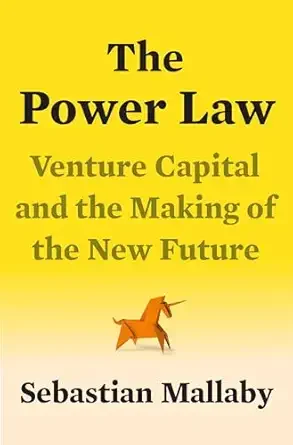
In The Power Law, Sebastian Mallaby traces venture capital from Arthur Rock's 1957 bet on the "traitorous eight" to SoftBank's excesses at WeWork. His argument: VC returns follow a power law, where a handful of grand slams pay for everything else, and that math shapes how the industry thinks, invests, and occasionally blows up. Part history, part defense of a frequently caricatured business.
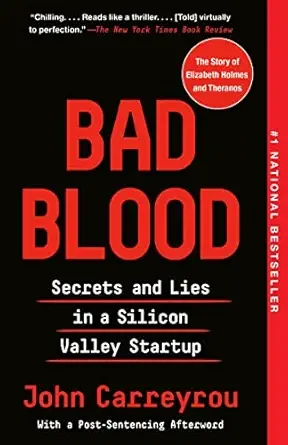
In Bad Blood, Pulitzer-winning reporter John Carreyrou tells how Theranos, a $9 billion startup built on a blood-testing device that never worked, deceived investors, retailers, and patients for over a decade. Elizabeth Holmes raised hundreds of millions on a promise her own scientists knew was false, then silenced anyone who said so. It is the definitive anatomy of a corporate fraud, and a warning about what belief can hide.
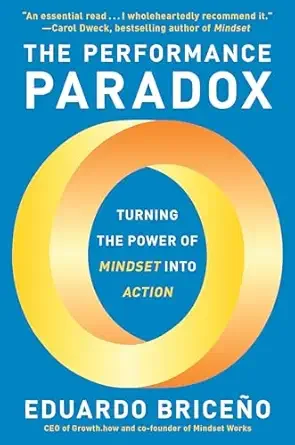
In The Performance Paradox, executive coach Eduardo Briceño exposes why high performers eventually plateau: they spend all their effort executing and none of it improving. His remedy is a deliberate split between the Performance Zone, where you do what you know, and the Learning Zone, where you build what you don't. Master the rhythm between them and growth stops being accidental.
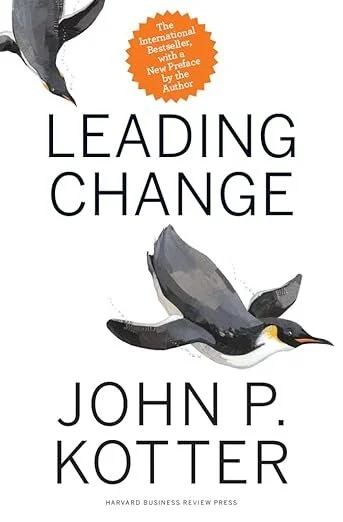
In Leading Change, Harvard professor John P. Kotter lays out the eight-step framework that has defined modern change management. Drawing on decades of research across hundreds of organizations, he reveals why most transformation efforts fail and exactly what leaders must do to beat those odds. From building urgency to anchoring new behaviors in culture, this book remains the go-to guide for anyone leading meaningful change.
In Grit, psychologist Angela Duckworth draws on years of research with West Point cadets, spelling bee champions, and top performers to argue that passion and perseverance, not raw talent, drive extraordinary achievement. She lays out the four assets of gritty people, interest, practice, purpose, and hope, and shows how to build them at any age. A clear, evidence-backed guide to turning long-term effort into lasting success.
In The Pricing Roadmap, B2B SaaS pricing expert Ulrik Lehrskov-Schmidt turns hundreds of real-world redesigns into a step-by-step framework for building pricing that grows revenue without torching customer trust. He shows why structure beats price points, how fencing and laddering shape commercial outcomes, and how to pick metrics, validate changes, and raise prices with confidence. Essential reading for any SaaS operator tired of guessing.
In The Big Short, journalist Michael Lewis tells the story of a handful of investors who saw the 2008 housing crisis coming and bet against the mortgage bond market. The book uses their stories to explain how subprime lending, credit default swaps, and rating agency failures produced the financial crisis. Useful reading for any finance professional trying to understand how markets get things spectacularly wrong.

In Elon Musk, biographer Walter Isaacson follows the SpaceX and Tesla CEO with extensive access over two years, including through his acquisition of Twitter. The book presents an unvarnished portrait of a leader whose drive produces extraordinary engineering achievements alongside significant personal and organizational damage. Worth reading for anyone trying to understand modern technology leadership in its most polarized form.
Curated Collections
👨💼 Become the CEO 👩💼

In Built to Last, Jim Collins and Jerry I. Porras present the results of a six-year Stanford University study answering one question: what makes truly exceptional companies outlast their peers? Comparing visionary organizations with their closest rivals, the authors dismantle the myth of the charismatic founder. Enduring greatness, they prove, requires a fierce dedication to core values, massive audacious goals, and an architectural obsession with building systems over launching products.

In How Big Things Get Done, megaproject expert Bent Flyvbjerg and journalist Dan Gardner reveal the hidden mechanics behind why projects fail. Drawing on a database of over 16,000 global endeavors, they show that successful projects share a counterintuitive approach: agonizingly slow planning followed by blistering execution. By mastering reference class forecasting and modularity, anyone can learn to beat the odds and deliver on time and on budget.

In Competing for the Future, strategy experts Gary Hamel and C.K. Prahalad dismantle the corporate obsession with downsizing and restructuring. They argue that cutting costs only makes an organization thinner, not healthier. To dominate tomorrow's markets, leaders must develop industry foresight, build a portfolio of core competencies, and pursue a massive strategic intent. It is a timeless blueprint for inventing new industries rather than playing endless catch-up in existing ones.

In The Infinite Game, Simon Sinek applies the philosophical framework of finite and infinite play to the business world. He argues that leaders who try to "win" their industries end up destroying trust, stifling innovation, and driving their companies into the ground. By mastering five essential practices—including advancing a Just Cause, building Trusting Teams, and studying worthy rivals—leaders can build resilient organizations designed to outlast their competitors and thrive for generations.

In Turn the Ship Around!, former Navy Captain L. David Marquet shares how he transformed the worst-performing submarine in the fleet into its absolute best. By abandoning the traditional top-down chain of command for a "leader-leader" model, he proves that true excellence comes from pushing decision-making power down the ranks. It is a practical, brilliant blueprint for replacing passive compliance with active, intent-based ownership.
In Competition Demystified, Bruce Greenwald and Judd Kahn argue that strategy is simpler than we think. True, sustainable competitive advantage comes from one thing only: barriers to entry. They boil down all complex theories to three core advantages: supply (lower costs), demand (customer captivity), and economies of scale (usually local). This book provides a clear, actionable framework to identify these moats and determine if your business is truly protected from competitors.

In Good to Great, Jim Collins presents a data-backed framework for why some companies make the leap to enduring success. After a five-year study, he found that great companies are led by humble "Level 5 Leaders," get the "right people on the bus" before setting a direction, and develop a simple, focused "Hedgehog Concept." They achieve breakthroughs not through single miracle actions, but by relentlessly pushing a "flywheel" of disciplined action until it builds unstoppable momentum.

In Reengineering the Corporation, Michael Hammer and James Champy argue that companies must obliterate their outdated, fragmented processes and start over. They advocate for a radical shift from focusing on individual tasks to redesigning end-to-end business processes to achieve dramatic gains in speed, cost, and quality. Using principles like organizing around outcomes, not tasks, the book offers a manifesto for fundamental business reinvention, not just incremental improvement.
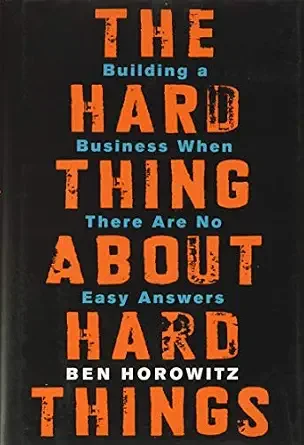
Ben Horowitz ran Loudcloud through the dot-com collapse, converted it into Opsware, sold it to HP, and became one of Silicon Valley's most influential investors, and his book is a deliberate corrective to founder mythology. Rather than explaining how to build a company, it deals with what happens when the company is failing: laying people off, demoting a loyal friend, telling employees the truth about a bad quarter. His durable contributions are the Struggle, the distinction between wartime and peacetime CEOs, and the rule that there are no silver bullets, only lead bullets. It is the rare business book more useful in a crisis than in a planning session.

Simon Sinek's argument starts with a Marine Corps custom, officers eating after their troops, and builds it into a theory of why some workplaces produce loyalty and others produce quiet self-protection. His central idea is the Circle of Safety: when people trust that leadership will absorb risk on their behalf, they stop guarding against threats from inside the organization and turn their energy outward. Sinek grounds this in the neurochemistry of endorphins, dopamine, serotonin and oxytocin, argues that most modern workplaces have become dopamine-heavy and trust-poor, and names the imbalance Destructive Abundance. The conclusion is that protecting people is not the reward for performance but the precondition for it.

Peter Drucker's 1967 classic argues that effectiveness is not a talent but a habit, and that any knowledge worker can learn it. Through five practices, from keeping an honest time log to building on strengths and making decisions that start with disagreement rather than consensus, The Effective Executive explains how to get the right things done instead of merely doing things right.
🤸♀️ Build a Better You 🛠️

Atomic Habits is James Clear's implementation manual for behavior change. Its two central claims are that small improvements compound in ways people systematically underestimate, and that lasting change works through identity rather than outcomes. Around those sits the Four Laws of Behavior Change — make it obvious, attractive, easy, and satisfying — with each law mapped to a stage of the habit loop and each reversible for breaking bad habits. The book's strength is its density of specific, immediately usable tactics.

In The 12 Week Year, Brian P. Moran and Michael Lennington expose the fatal flaw of annualized thinking. They argue that twelve-month goals breed complacency, causing us to delay the actual work until December. By redefining a year as just twelve weeks, the authors provide a rigorous execution system that manufactures constant urgency, replacing vague resolutions with ruthless weekly tracking, predictable routines, and measurable daily actions.

In Discipline is Destiny, Ryan Holiday explores the ancient Stoic virtue of temperance. Drawing on historical figures like Queen Elizabeth II, Lou Gehrig, and Marcus Aurelius, Holiday argues that self-control is not a restriction, but the ultimate source of personal freedom. By mastering the physical body, regulating the mind, and elevating the soul, readers learn how to build the iron-clad habits required to achieve enduring greatness and avoid self-destruction.

In Limitless, world-renowned brain coach Jim Kwik provides a practical manual for upgrading your cognitive performance. Having overcome a severe childhood brain injury, Kwik dispels the myth that intelligence is fixed. Instead, he introduces a three-part framework—Mindset, Motivation, and Methods—to help readers conquer digital distractions, accelerate learning, and unlock their brain's true potential. By mastering these pillars, anyone can train their memory, enhance their focus, and learn anything faster.
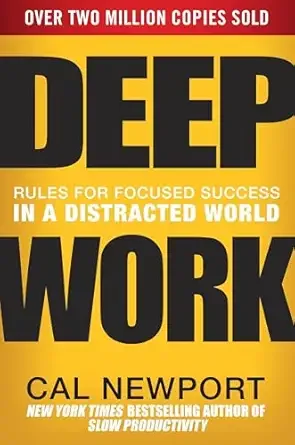
In Deep Work, computer science professor Cal Newport argues that the ability to focus without distraction is the defining skill of the modern economy. He divides professional activities into "deep" and "shallow" work, proving that constant connectivity actively destroys our cognitive capacity. Blending neuroscience with practical scheduling tactics, Newport provides a rigorous framework for eliminating digital noise, embracing boredom, and training your brain to produce massive value in less time.

StrengthsFinder 2.0 by Tom Rath challenges the conventional wisdom of fixing weaknesses. Based on decades of Gallup research, it argues that the path to excellence is to identify your innate talents and invest in them to create powerful strengths. The book and its accompanying assessment reveal your top five of 34 "talent themes," providing a personalized guide to achieving higher engagement, performance, and fulfillment in your life and work.

In her influential book Lean In, Sheryl Sandberg urges women to combat the internal barriers holding them back in the workplace. She argues that women should "sit at the table" by speaking up, owning their ambition, and fighting impostor syndrome. Sandberg provides a compelling framework for navigating career challenges, from avoiding the trap of "leaving before you leave" to the necessity of making your partner a true partner at home.
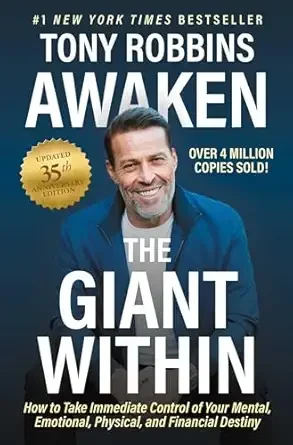
In Awaken the Giant Within, Tony Robbins lays out a 544-page system for changing behavior on purpose: pain and pleasure as the engine, beliefs built on references, and the personal rules that quietly decide whether you ever feel satisfied. Overclaimed in places and unmistakably a seminar in book form, it still contains ideas that have outlasted most of the genre.

In The Happiness Advantage, Harvard researcher Shawn Achor argues the success formula most of us run is backwards. Happiness is not the prize waiting at the end of hard work; it is the fuel that makes the work go better. Across seven principles, from the Tetris Effect to the Zorro Circle to the 20-Second Rule, he shows how small mindset and habit shifts compound into real performance gains.

In The 5 AM Club, leadership expert Robin Sharma uses a narrative fable to present a comprehensive system for mastering your morning. He argues that waking up at 5:00 a.m. offers a distraction-free window to optimize your mind, body, and spirit. By applying structured routines like the 20/20/20 Formula and cultivating four interior empires, you can build lasting habits and dramatically increase your daily output.

In Thinking, Fast and Slow, Nobel laureate Daniel Kahneman provides a masterclass in human irrationality. He reveals that our minds operate on two systems: one fast, intuitive, and prone to hidden biases, the other slow, logical, and incredibly lazy. By exposing the predictable mental shortcuts we take, Kahneman offers a profound framework for making better decisions in business and life while recognizing the limits of our own objectivity.
💡Startup Success 📈

In Zero to One, PayPal co-founder and venture capitalist Peter Thiel challenges almost every accepted dogma of the Silicon Valley startup ecosystem. Blending philosophy with ruthless business strategy, he argues that the greatest companies do not copy existing models; they create entirely new markets. By pursuing secrets, rejecting the cult of extreme iteration, and deliberately building creative monopolies, founders can escape the margin-destroying trap of competition and invent the future.

In Hook Point, Brendan Kane argues that you have less than three seconds to capture attention in today's saturated digital world. He provides a practical framework for crafting compelling "hooks"—short, powerful messages that stop people from scrolling. By focusing on simplicity, originality, and emotional resonance, and by relentlessly testing your approach, you can break through the noise and ensure your message is actually heard by your intended audience.
In Built to Last, Jim Collins and Jerry I. Porras present the results of a six-year Stanford University study answering one question: what makes truly exceptional companies outlast their peers? Comparing visionary organizations with their closest rivals, the authors dismantle the myth of the charismatic founder. Enduring greatness, they prove, requires a fierce dedication to core values, massive audacious goals, and an architectural obsession with building systems over launching products.

In The Four Steps to the Epiphany, Silicon Valley veteran Steve Blank dismantles the traditional approach to launching a business. He argues that building a product first and searching for buyers later is a recipe for disaster. Instead, he introduces the Customer Development methodology—a rigorous process of testing hypotheses, securing early adopters, and validating your business model before scaling. This dense, highly practical manual laid the exact foundation for the modern Lean Startup movement.

In Buy Then Build, Walker Deibel challenges the myth that entrepreneurs must start from scratch. He presents a compelling case for "acquisition entrepreneurship"—buying an existing, profitable business. This approach de-risks the journey by providing immediate cash flow, customers, and proven systems. The book serves as a practical playbook for finding, financing, and growing an existing company, offering a smarter, more direct path to entrepreneurial success.

Founders at Work by Jessica Livingston demolishes the myth of the overnight success through a series of candid interviews with the creators of companies like Apple, PayPal, and Flickr. The book reveals that the early days of startups are defined not by grand plans, but by scrappy improvisation, dogged persistence, and a fanatical focus on solving a real user problem. It’s an essential, unfiltered look at the messy truth of innovation.

Running Lean by Ash Maurya is a practical, step-by-step guide for applying lean principles to a new business or product. The book introduces the "Lean Canvas," a one-page business model for capturing your "Plan A" and identifying your riskiest assumptions. It provides a clear methodology—based on conducting "Problem" and "Solution" interviews—for systematically testing these assumptions with customers, achieving product/market fit, and iterating your way to a plan that works before you run out of resources.

In The Lean Startup, entrepreneur Eric Ries applies the principles of lean manufacturing to early-stage business creation. He argues that startups must abandon complex, long-term business plans in favor of rapid, scientifically tested experimentation. By embracing the Build-Measure-Learn feedback loop, deploying Minimum Viable Products, and replacing vanity metrics with rigorous data, founders can systematically reduce uncertainty and build products that real customers actually want to buy.

The Startup Owner's Manual by Steve Blank and Bob Dorf is the definitive guide to the Lean Startup movement. It argues that startups are not small versions of big companies, but are temporary organizations designed to search for a repeatable and scalable business model. The book provides the four-step "Customer Development" process—a rigorous, evidence-based methodology that requires founders to "get out of the building" to test their hypotheses and find product/market fit before they scale.
Ben Horowitz ran Loudcloud through the dot-com collapse, converted it into Opsware, sold it to HP, and became one of Silicon Valley's most influential investors, and his book is a deliberate corrective to founder mythology. Rather than explaining how to build a company, it deals with what happens when the company is failing: laying people off, demoting a loyal friend, telling employees the truth about a bad quarter. His durable contributions are the Struggle, the distinction between wartime and peacetime CEOs, and the rule that there are no silver bullets, only lead bullets. It is the rare business book more useful in a crisis than in a planning session.
📣 Marketing Mastery ✉️
In Hook Point, Brendan Kane argues that you have less than three seconds to capture attention in today's saturated digital world. He provides a practical framework for crafting compelling "hooks"—short, powerful messages that stop people from scrolling. By focusing on simplicity, originality, and emotional resonance, and by relentlessly testing your approach, you can break through the noise and ensure your message is actually heard by your intended audience.

In Crossing the Chasm, Geoffrey A. Moore explains why most tech products fail to gain mainstream acceptance. He identifies a dangerous gap—"the chasm"—between visionary early adopters and the pragmatic early majority. To succeed, companies must abandon a one-size-fits-all approach and instead focus all their resources on dominating a single niche market, delivering a "whole product," and then expanding from that secure beachhead.
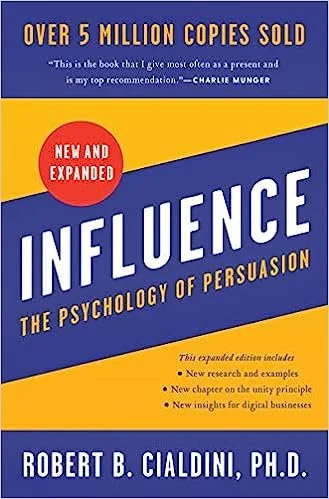
In Influence, Dr. Robert Cialdini uncovers the six universal principles that cause people to say "yes": Reciprocity, Commitment/Consistency, Social Proof, Liking, Authority, and Scarcity. This essential guide explains the psychology behind these powerful motivators, using real-world examples to show how they can be used for both persuasion and self-defense. Master these concepts to become a more effective, ethical influencer and to recognize when others are trying to manipulate you.

The 1-Page Marketing Plan by Allan Dib provides a simple, systematic approach to marketing for small and medium-sized businesses. The book uses a 9-square canvas to guide owners through the three crucial phases of the customer journey: Before (Prospects), During (Leads), and After (Customers). By focusing on direct response marketing and filling in each of the nine boxes—from selecting a target market to orchestrating referrals—any business can create a powerful, effective marketing plan on a single page.

In Superfans, entrepreneur and podcaster Pat Flynn reveals how to build a devoted community around your brand, proving that you do not need millions of passive followers to build a highly profitable business. By intentionally guiding people through the Pyramid of Fandom—from casual audience members to active participants to a connected community and true superfans—Flynn provides a tactical blueprint for cultivating loyalty that outlasts any algorithm change.
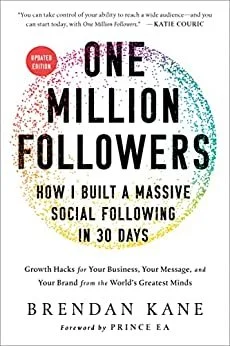
In One Million Followers, digital growth strategist Brendan Kane reveals the methodology he used to build a massive global audience in just thirty days. Drawing on his experience running campaigns for Fortune 500 brands and global celebrities, he outlines a systematic, data-driven approach to social media. By combining rapid testing, precise psychological targeting, and compelling hook points, Kane shows how to stop guessing and start engineering digital growth.